
ARTICLE
Improving your operation with ANDRITZ Digital Twin technology
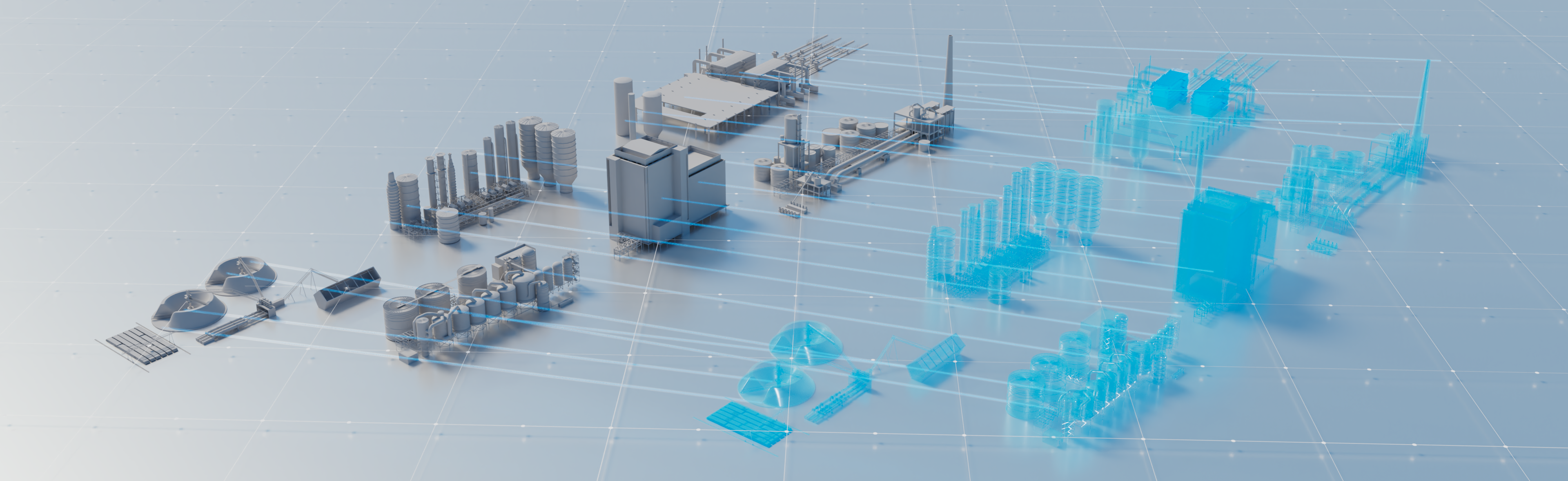
The ANDRITZ Digital Twin represents a digital replica of the physical process using asset-specific information such as actual physical dimensions and equipment characteristics.
When connected to online plant data, the Digital Twin acts like a performance information tool like an MRI of the human body—both can be used to find otherwise undetectable anomalies and highlight the gaps between actual and optimal operation.
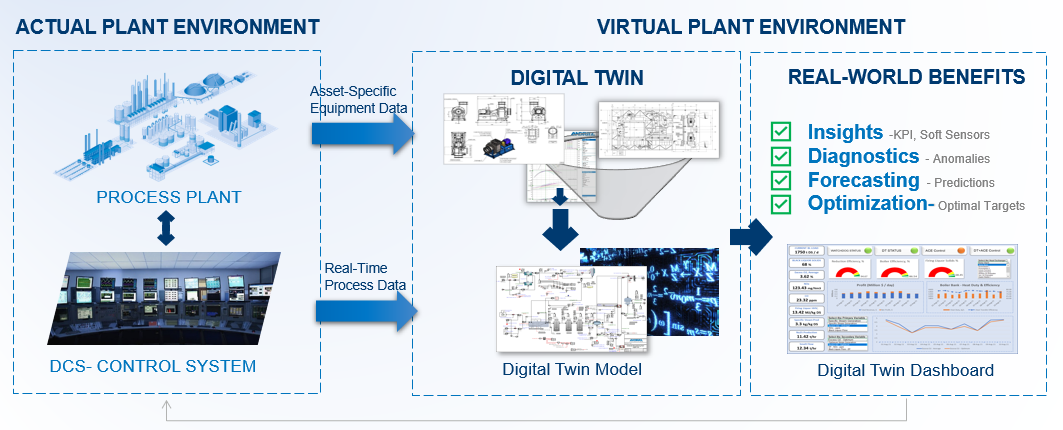
Digital Twin Logic / ANDRITZ ©
Imagine having a digital copy of your plant so you can play with that to try different scenarios to find the best way to operate. Now, imagine if there is a possibility to try these different scenarios automatically.
This is what our Digital Twin can do. Not only this but it is also integrated into an Advanced Process Control so that the best setpoints will be defined automatically.
Digital Twin is based on both the first principal models (using IDEAS) and artificial intelligence (using Metris). Understand more by watching our video:
A Digital Twin can provide:
- Additional benefits to APCs: Provides critical feed-forwards, feedback, and optimal setpoints.
- Solution based on 1st principles: Design equations and thermodynamics. State-of-the-art IDEAS Simulator with 700+ Objects that simulate the behavior of key assets in the P&P industry.
- Based on AI: Automated Machine Learning software with 500+ different algorithms automatically chooses the best model.
- Anomaly detection: Avoid expensive downtimes.
- Virtual transmitters: For difficult-to-measure variables & saving on investment in physical instruments and services.
- What-if scenarios: Online/offline estimation of parameters, materials, costs, quality, quality, etc.
- Operator guidance: Important KPIs for performance, monitoring & technical decision-making through informative HMI.
- Data reconciliation: Identify inconsistent plan data.
- Realtime application: Alarms, warnings, advice –all happen in real time.
- Optimal Plant Operation: Predictions based on current plant status.
Multiple benefits, depending on the process island:
- Reduce process variability
- Reduction of chemical, energy, and fuel consumption
- Increase production, working closer to limits
- Reduction of production losses due to unstable process
